.png)
.png)
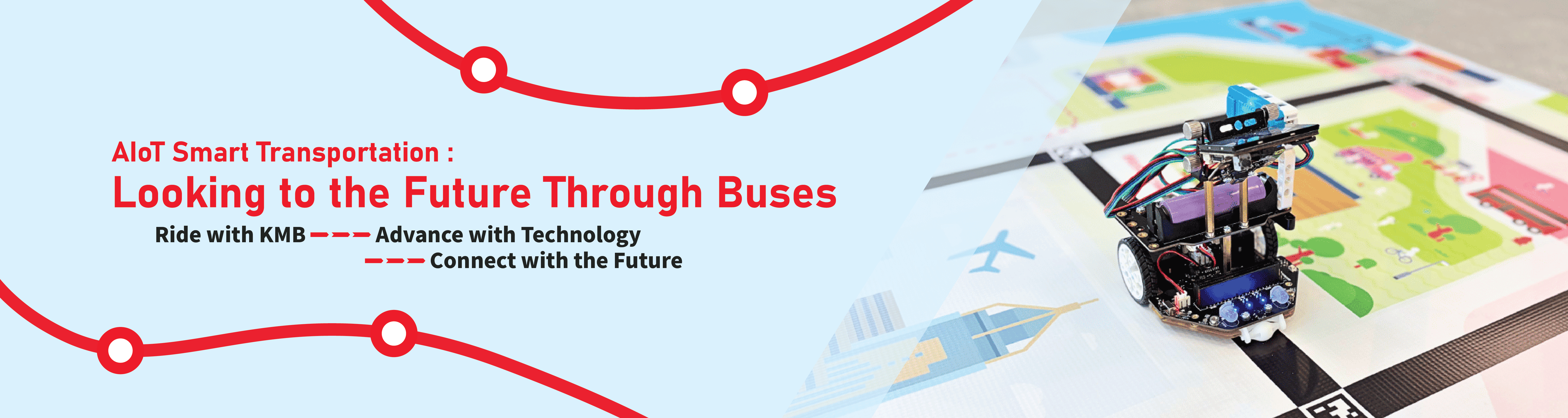
This course centers on the "Future Public Transportation System," guiding students to reshape urban mobility through AIoT technology. Integrating real-world industry cases and technical resources, it offers hands-on experience from prototyping to commercial solutions. Covering three key themes—remote monitoring, autonomous driving perception, and customized transit—the curriculum combines AI-driven model vehicles, sensor systems, and app development to cultivate practical and innovative skills.
Duration
6 sessions × 1.5 hours (total 9 hours)
No. of students
15 - 20 people
Students will learn the fundamental concepts of the Internet of Things (IoT) and the MQTT communication protocol. Through hands-on construction and programming of AI autonomous vehicles, they will practice data collection and AI model training, ultimately mastering the implementation methods and application scenarios of real-time remote monitoring systems.
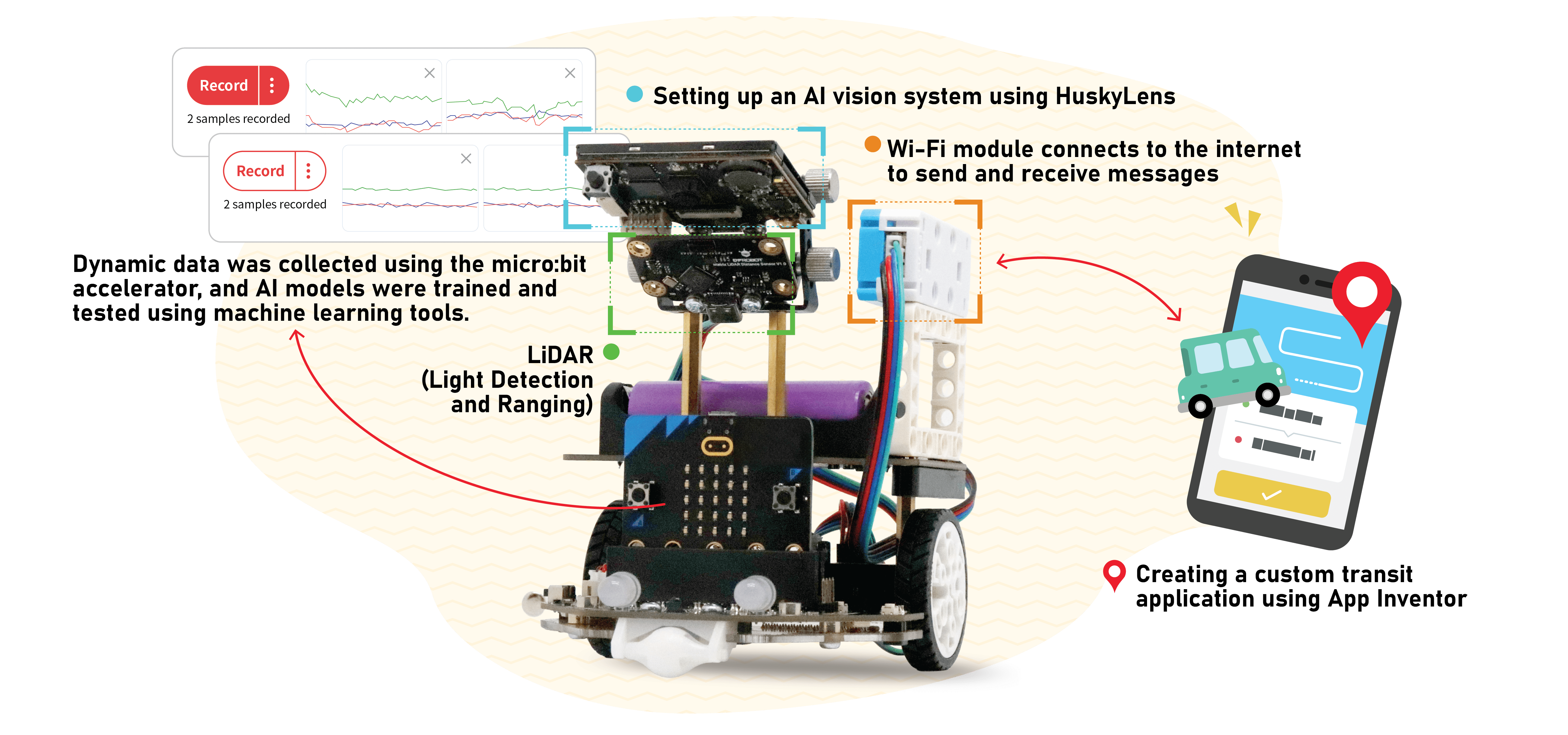
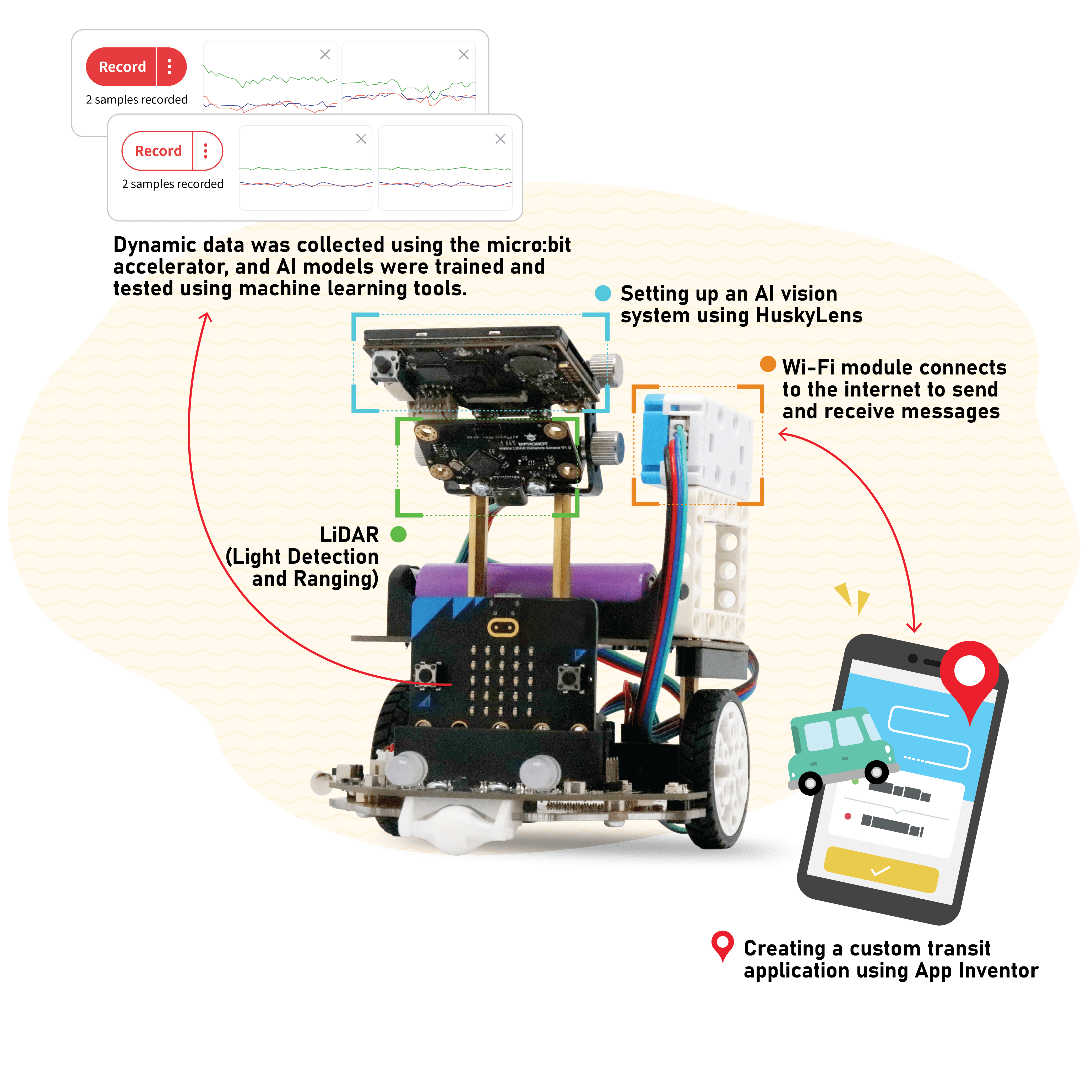
The course delves into the technical principles of LiDAR and its environmental sensing applications. By integrating AI vision systems for data analysis, students will train vehicles to recognize pedestrians, traffic signals, and obstacles. They will use micro:bit accelerometers to collect dynamic data, employ machine learning tools to train and test AI models, and integrate multi-source sensor data to achieve autonomous vehicle decision-making.
Students will be introduced to demand-responsive transit service models, learning to apply AI models for QR code and optical character recognition (OCR) technology. Using the App Inventor development platform, they will implement a customized public transport application, simulating the complete process of passenger demand reception, intelligent route planning, and service dispatch.
Thank you for your interest! Your inquiry is well received and we will get back to you soon!
Please fill out the form below to learn more about the KMB AIoT education program!